
Now that the typhoon has passed, summer has finally returned to Okinawa.
However, it was cool at 5:00 a.m. when we set sail for Aguni—so much so that I wondered if we’d skipped summer and gone straight into fall.
“It’s supposed to be a southerly wind, but I don’t see any dragonflies flying around,” I muttered to myself as we arrived at Aguni, where I was curious to see how the typhoon had affected things.
Well, let’s just brace ourselves for the water clarity.
Up until now, we’d been taking Okinawa’s fantastic visibility for granted, but we have experience guiding in Izu during the springtime murk.
With visibility like this, we can definitely go.
Air Temperature: 32°C, Water Temperature: 25–26°C, Visibility: 12–15 m
Dives ①–③: Fudenozaki
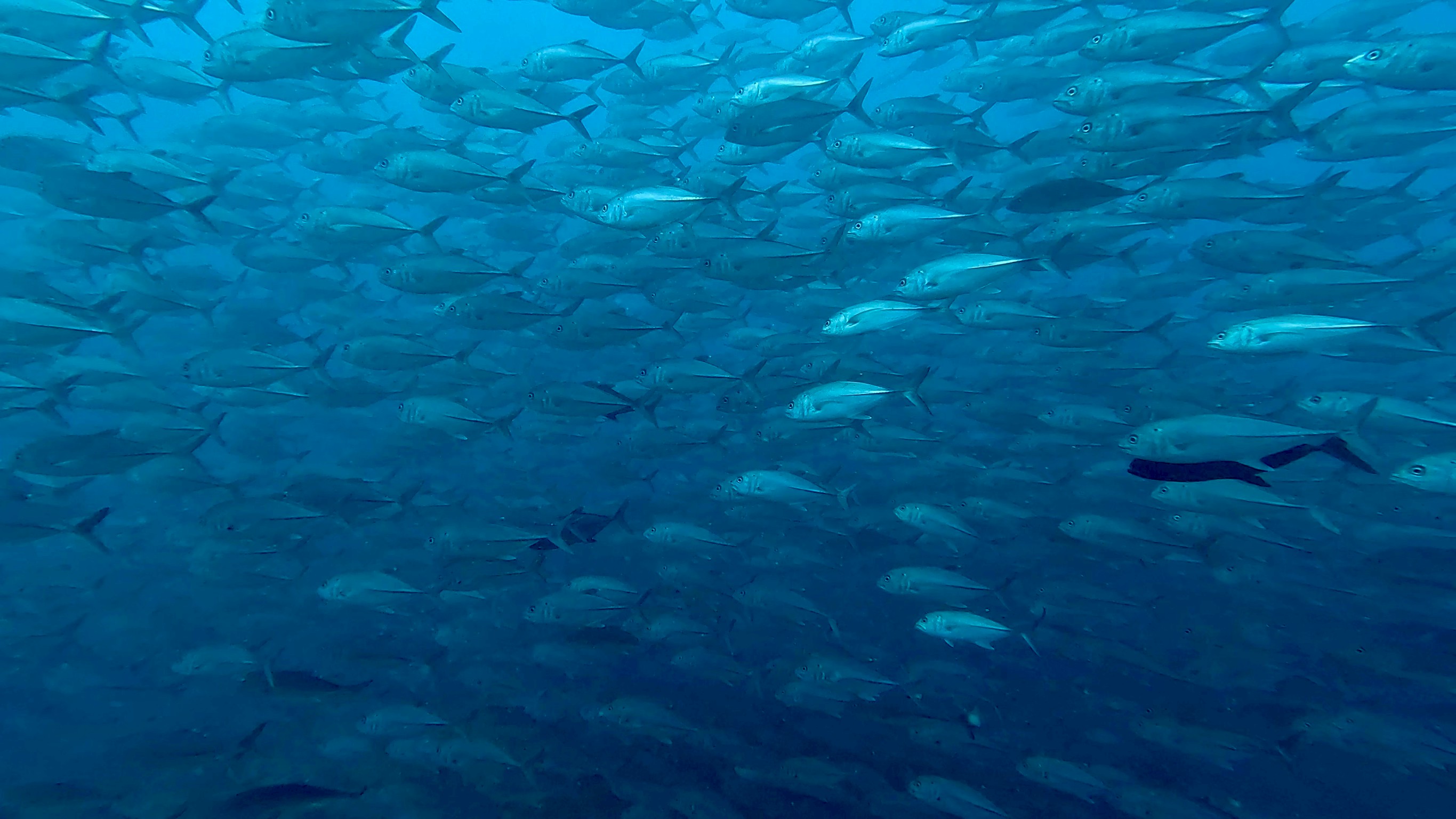
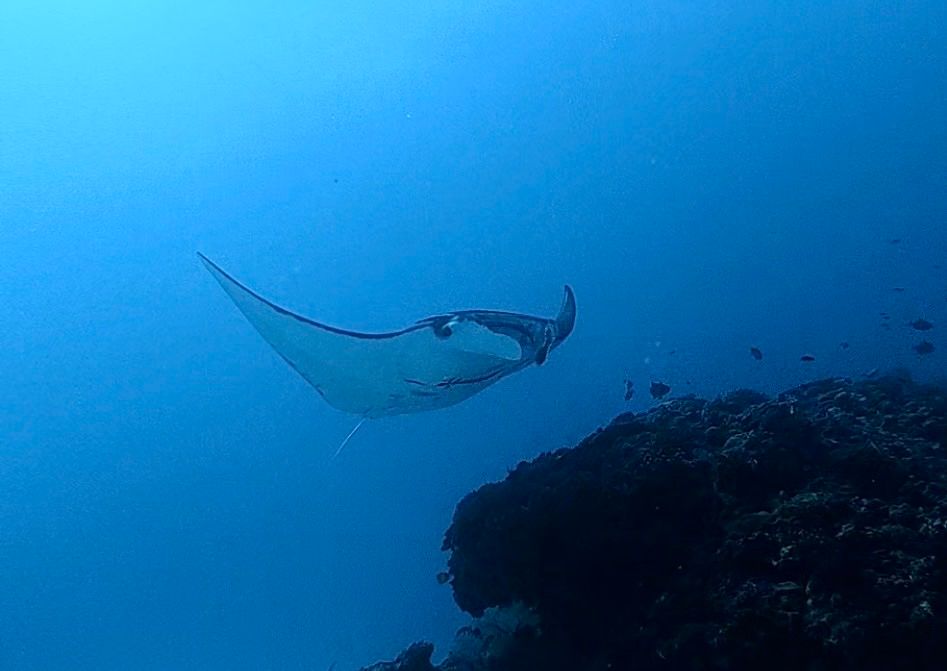
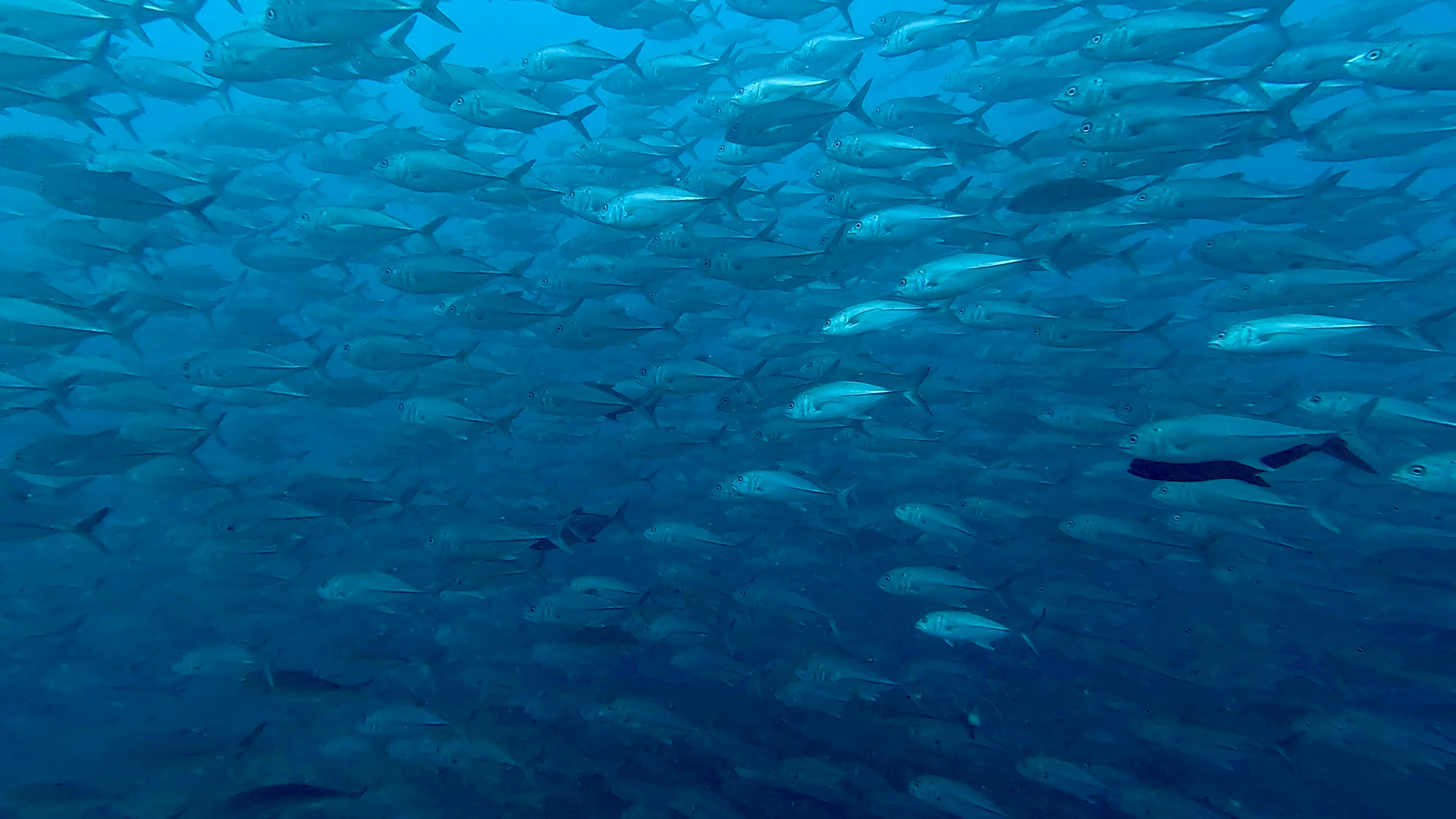
To cut to the chase, we spotted schools of giant trevally on two out of three dives.
And the barracudas, sharks, and yellowfin tuna were all still there.
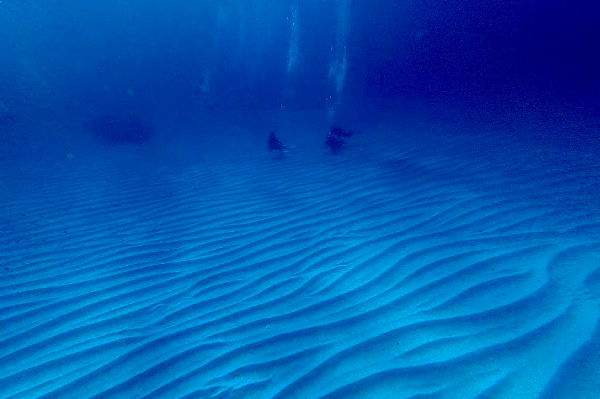
However… this really drove home just how important visibility is.
When visibility changes by 15 m, the difficulty of spotting big fish while drift diving skyrockets.
Visibility improved from the first dive to the second and then to the third, so I think it’ll be even better tomorrow!
Meanwhile, the Kerama group is doing their Open Water open-water training.
Air temp: 31°C, Water temp: 25–26°C, Visibility: 15m
① North Kuroshima, ② Kamekichi, ③ Jitsuru
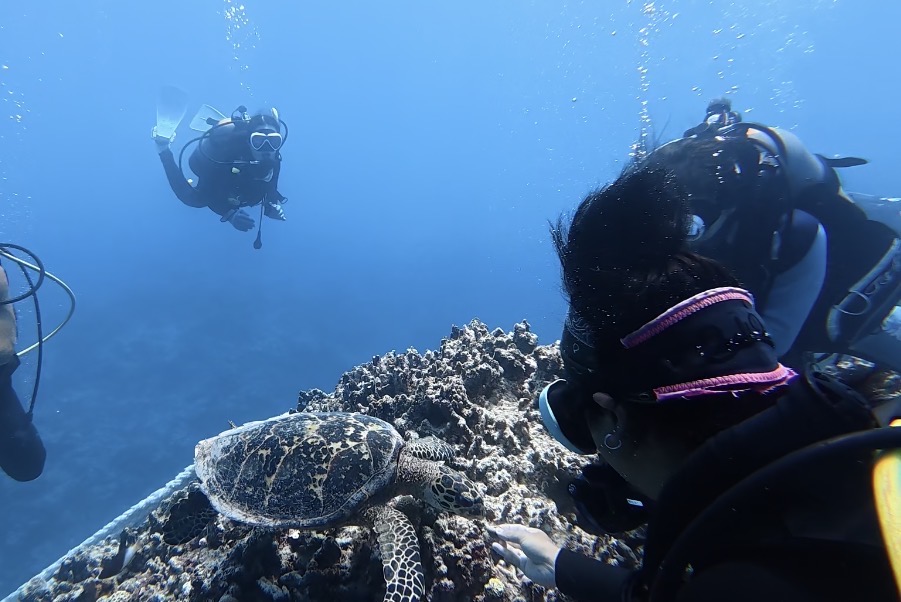
Visibility here has improved compared to yesterday!
You handled the skills smoothly and even got to see a hawksbill turtle safely.
So, congratulations on your Open Water certification!
This is just the beginning, so let’s go dive at all kinds of different sites!
Tomorrow, we’ll be doing a fun dive in Kerama!